Why I Love Unfair Traps in Arcade Games
By DUCK_BERET
October 4, 2026
Categories: Game Development | Game Design
Some arcade games contain the occasional trap that is practically unavoidable unless you know it's coming. An enemy jumps out and immediately hits you, and you simply have to memorize them and avoid them on future runs.
I've seen a lot of negative sentiment around these kinds of traps over the years, often either just stating that they're unfair (and therefore bad) or even that they just exist as a way for arcade games to steal your money. I love these kinds of hard memo traps, so I thought I'd write about why I feel that way.
Unfair traps are funny
Jokes are about subverting expectations. Imagine trying to tell jokes if you had to clearly telegraph the punchline as not to surprise anyone. I Wanna Be The Guy would be so much less funny if it wasn't allowed to hit players with anything that they didn't see coming, and the same thing applies to arcade games. Difficult action games are a great fit for Looney Tunes-esque comedy, even when the player is the one playing the Wile E. Coyote role.
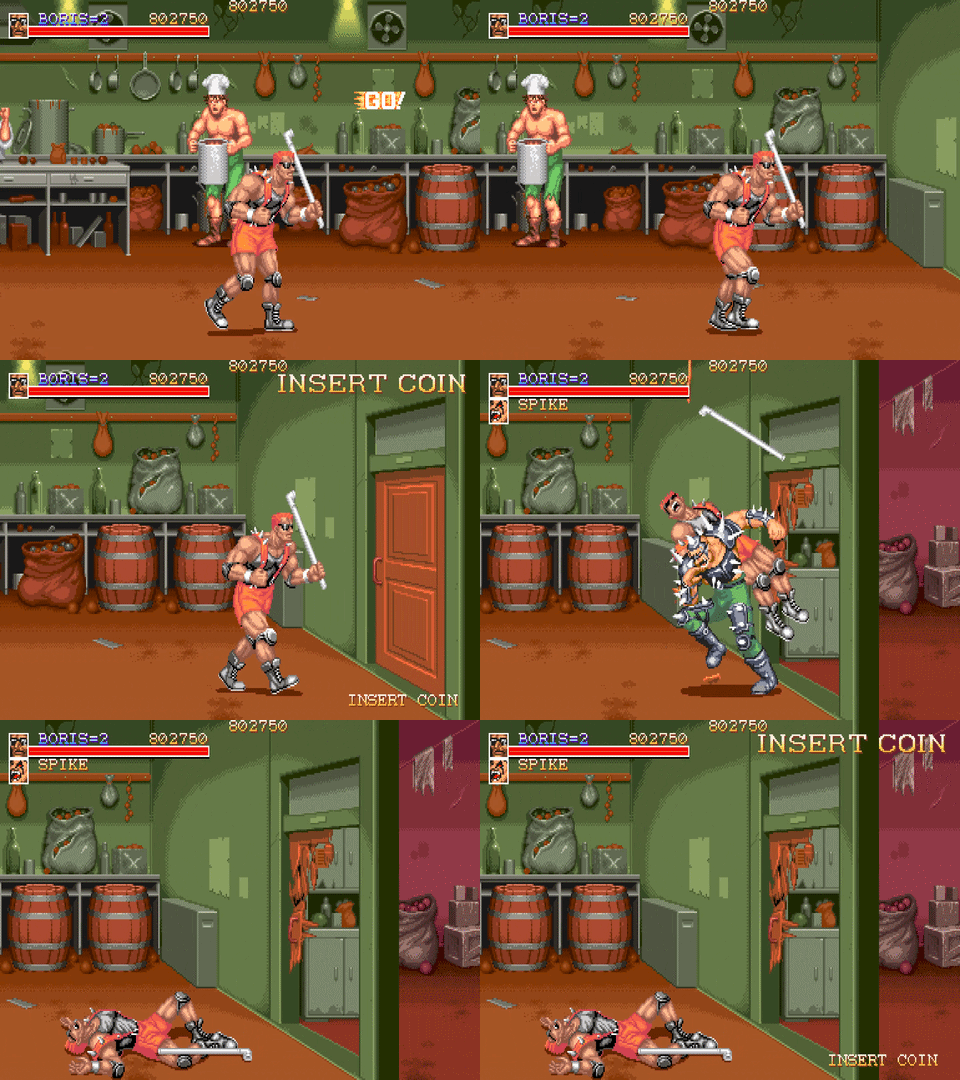
All of the examples in this section are from Konami's excellent 1993 beat 'em up Violent Storm because I think that game does a fantastic job of deploying these kinds of traps. Here's one of the ways you can avoid that trap in future runs:
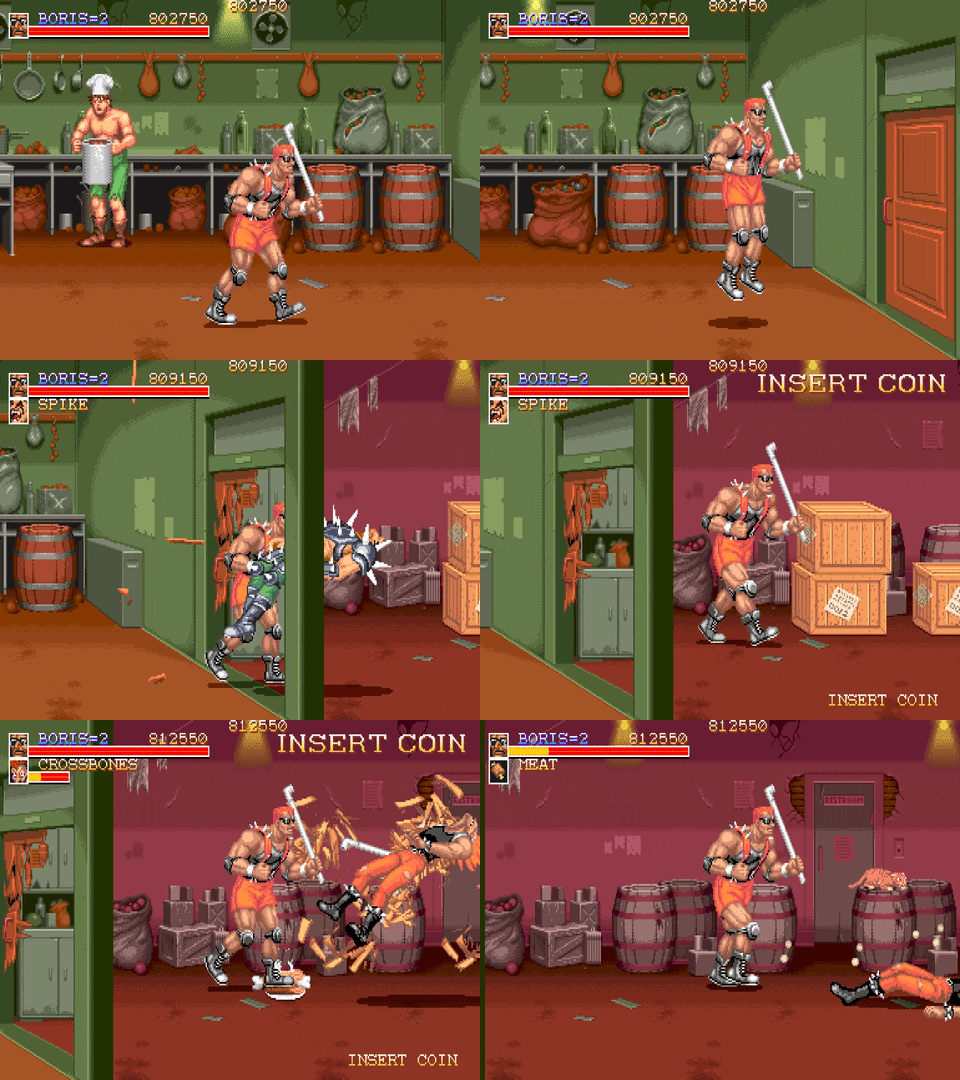
For maximum silliness, you can even place some subtle clues for your unfair trap, in a way that the player hopefully won't notice on their first run. They'll laugh even harder on their second run when they see the clues:
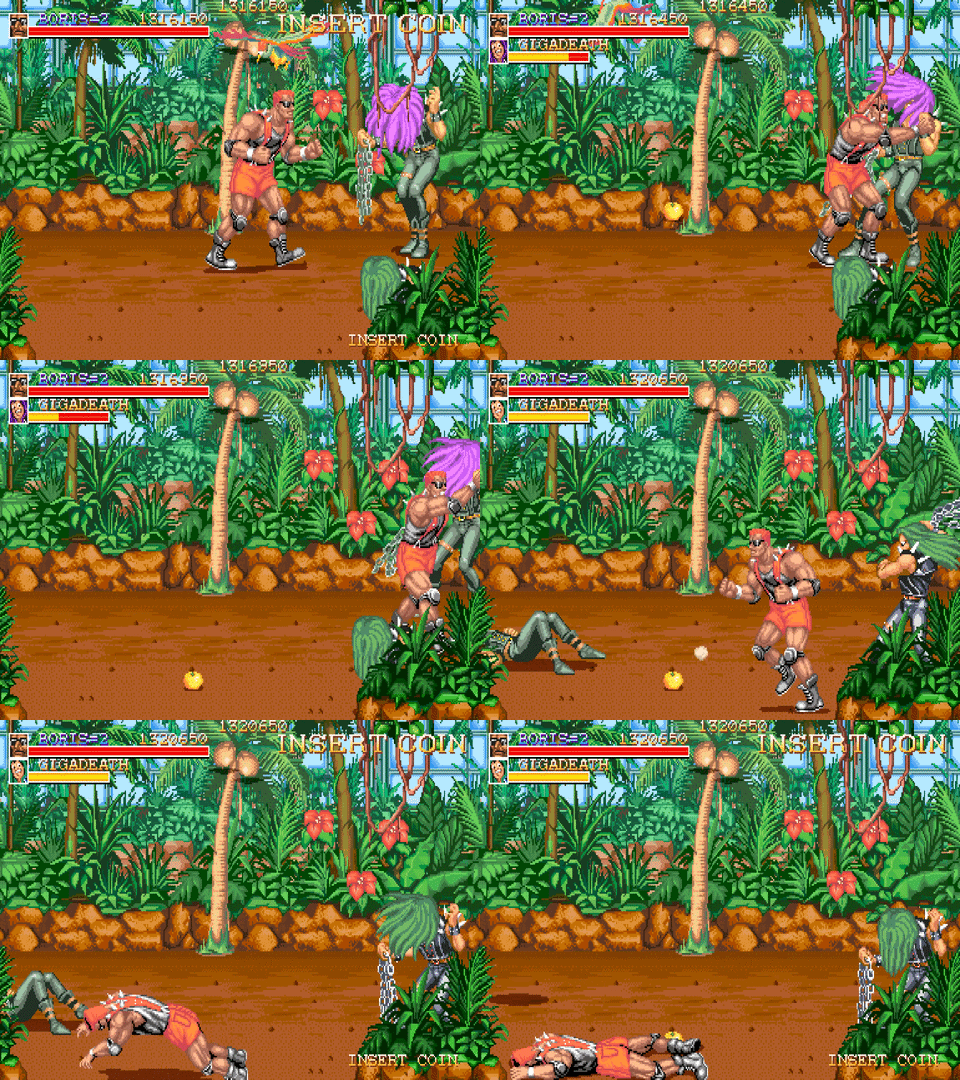
Because arcade games are run-based, the same trap often manages to be funny multiple times. It won't catch you on most of your subsequent runs, but maybe you'll forget about it one time and get caught out. Even if you remember that it's coming, there's a chance you'll mess up your execution and get hit by it anyway. Those are some of the funniest moments in these games to me.
You can even add your own callbacks by adding another trap later in your game that plays on the expectations set by the previous trap. I Wanna Be The Guy does this on its first screen with the apple that falls upwards after you're trained to avoid apples that fall downwards, and Violent Storm does this by switching up the door trap in the game's second loop:
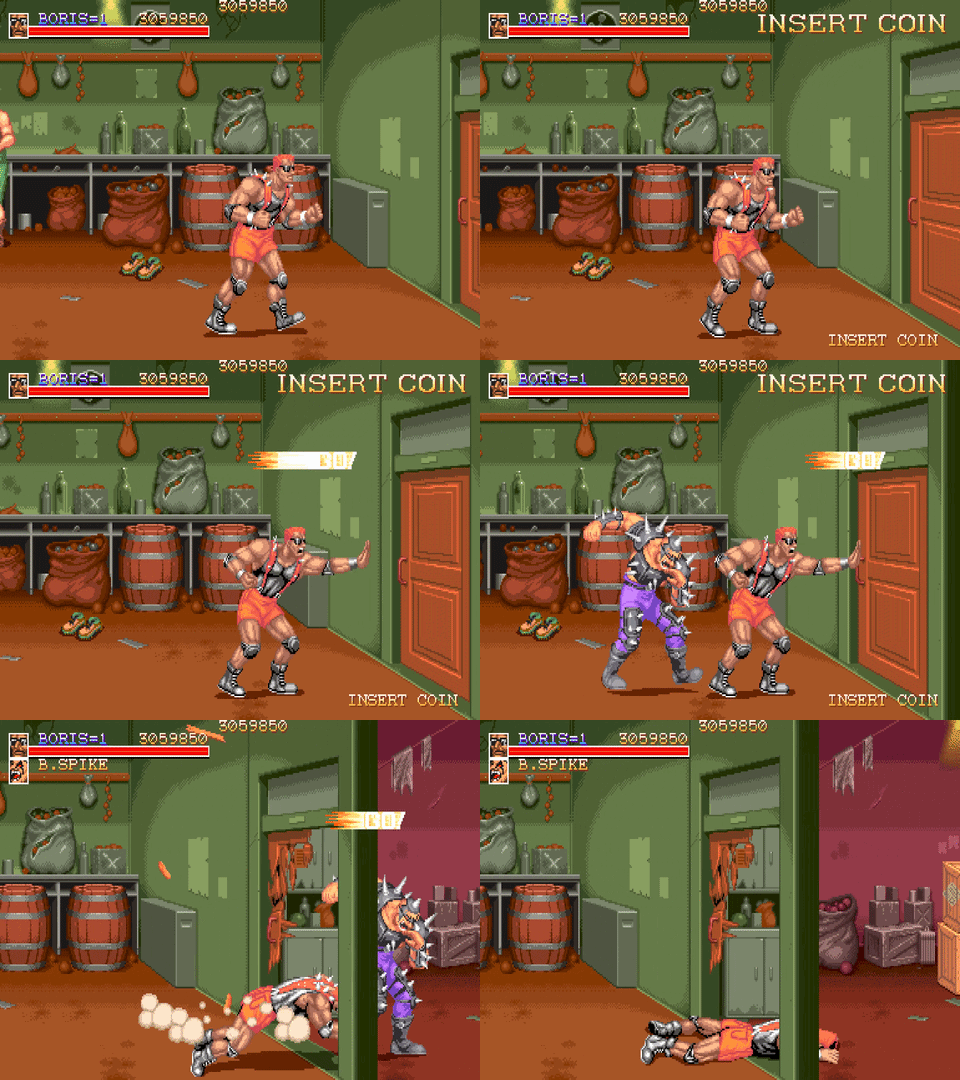
Unfair traps can also be used as a funny and effective way of letting people know that a section of your game, or maybe your entire game, is going to be difficult. They're like a big neon warning sign. Violent Storm's second loop only activates if you clear the game's first loop without any continues, and the game makes it clear right from the start that you're going to be dealing with drastically different (and sometimes much more difficult) enemy placements than the first loop:
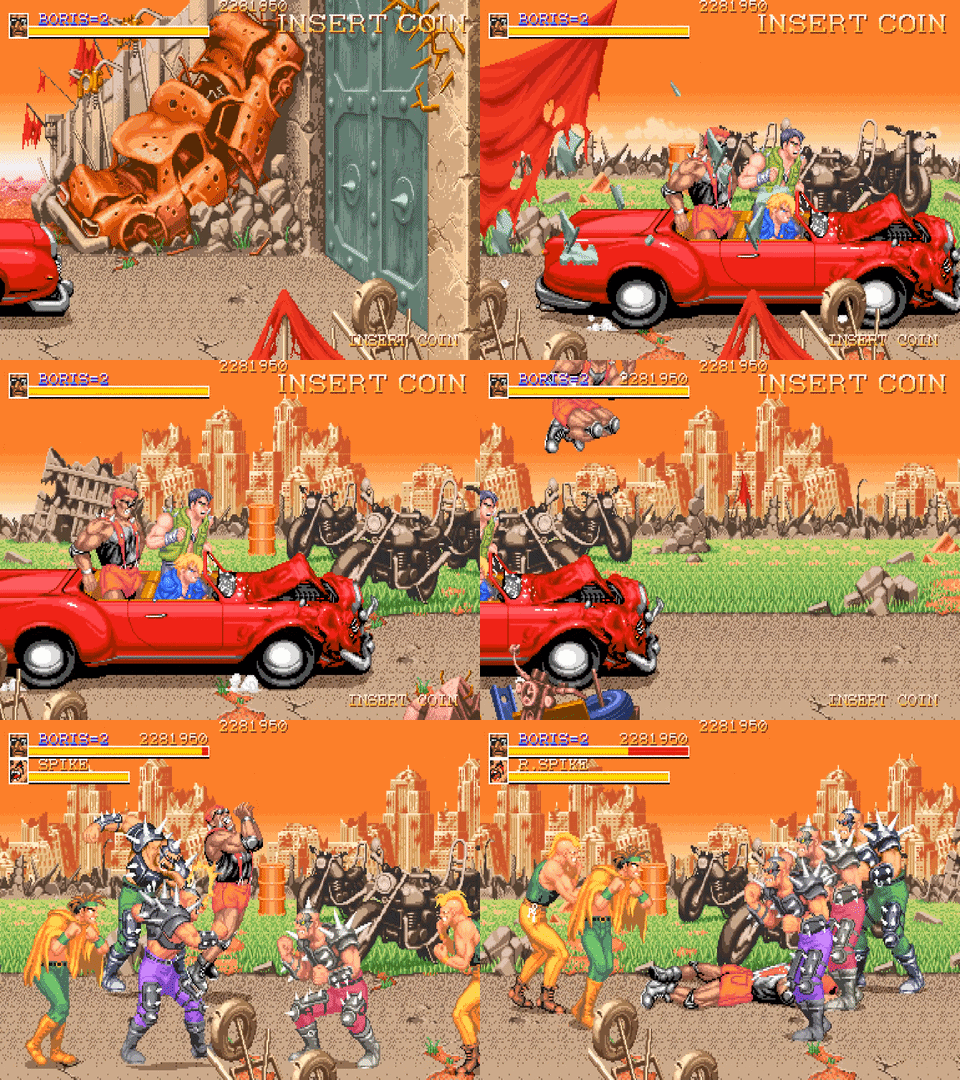
I love all of these unfair traps! In aggregate, they make a huge contribution to Violent Storm's funny lighthearted atmosphere.
Unfair traps give players something that's easy to learn
Learning an arcade-style game's fundamental skills is a slow, steady process that sometimes happens on a subconscious level, and it is often going to be the bottleneck when it comes to learning a game. Getting your Haggar crowd control skills to the point where you can clear stage 6 of Final Fight might take you tens or even hundreds of hours, and you might not even notice all the small ways in which you're improving during that time.
You can try to break this process down into smaller concrete sub-skills to improve on, but there's a good chance you'll eventually hit a plateau where you're not good enough to clear the game but you can't figure out exactly what to work on. In these situations, sometimes it feels good to simply be handed an easy win that instantly lets you improve at the game in a concrete way.
That's where unfair traps come in. All you need to do is memorize when the trap will appear and how to avoid it, and you're one step closer to clearing the game. Improving feels good!
Because learning a game's fundamental skills is often the bottleneck, adding a hard memo trap that catches you out and forces you to lose a life or restart your run probably won't change how much time it takes you to learn to clear the game. Those ten minutes that you might have to spend making it back to the same point in your next run (if you're not using practice mode) are just another ten minutes that get to spend subconsciously practicing your fundamentals.
On the other hand, if you already have lots of experience in other similar games and your fundamentals are already good enough that they can carry you through a game you've never played before, hard memorization traps (along with other game-specific skill checks like hard execution and sections that require heavy routing) will force you to actually learn something about the game you're playing before you clear it. I hate the feeling of clearing an arcade game before I feel like I sufficiently understand it, and adding some unfair traps to a game will give even expert players something to learn.
This entire phenomenon has also been observed in fighting games, where beginners often have an easier time sticking with "hard" fighting games that have lots of concrete execution checks and matchup knowledge to learn, instead of "easy" fighting games that help new players quickly reach the point where the all that's left is the comparatively slow and unrewarding process of learning to get better at making reads. (source: Why complicated fighting games are weirdly good for beginners, by PatTheFlip).
Unfair traps discourage players from putting too much stock in any individual run while learning the game
Arcade games are hard, and learning them is a two step process:
- Get good enough at the game that you will be able to clear the game
- Clear the game
Because of this, the only progression system that matters in an arcade-style game is the one that's happening inside the player. Getting a game over near the end of a run and having to start from the beginning doesn't mean you "lost all of your progress" because you almost certainly learned something along the way, even if it was subconscious. No game over screen can take that away from you. Besides, all of your runs are guaranteed to fail until you're good enough to clear the game anyway, so you may as well get used to it.
So when you're learning an arcade game, it's much healthier not to worry too much about any individual run, and instead just try to improve at the game and have fun along the way. What better way to convince players to adopt this mindset than to drop some unfair traps into your game? After all, why care so much about your current run when you know there's a chance you might lose it to an unfair trap that you have absolutely no way of anticipating? As we've already covered, by the time players are good enough to clear the game they'll already have learned about all of its unfair traps anyway, so these traps are only going to catch them out at a point in their learning process when all their runs are already guaranteed to fail.
Unfair traps let players know to expect an arcade-style challenge
Arcade-style game design often relies on granular checkmate situations that the player has to actively fight to avoid. They're also often full of difficult combat encounters that the player has to try and figure out how to approach, usually by playing several runs or by trying out different approaches in practice mode. I talk about this in my posts on how to 1 Credit Clear (1CC) arcade games and how I design arcade-style games.
Unfortunately, modern games have trained some players to value first-time fairness above everything else. These players might get annoyed by any surprise that isn't sufficiently telegraphed and reactable, any checkmate situation that can't be dodge rolled out of (even if it was the player's own fault that they got themselves in this situation in the first place), or anything that asks them to replay "content" that they have already cleared once. Some of them even hate the idea of having to come up with a plan or route through a specific encounter or section of a stage, preferring games that either have randomly generated stages or that are easy enough that you can clear them on your first attempt without knowing anything about the stage design in advance.
You cannot change the design of an arcade-style game to suit these players' tastes without losing part of the core that makes these games so interesting in the first place. With that in mind, the least you can do is give these players a clear indicator of what they're signing up for as soon as possible, letting them decide whether or not they want to stick around. Adding an unfair trap early in the game gets this message across pretty effectively.
So get out there and add some unfair traps to your game! They're a useful tool and I don't think you should be scared to use them.